
The Mulligan Explained: Golf’s Famous Do-Over and How It Works in GTCG
The Mulligan Explained “I’m taking a correction shot.” Those five words, spoken on a first tee somewhere in 1920s Montreal, accidentally created one of golf’s most beloved traditions. And if you’ve ever played Golf the Card Game, you know the Mulligan isn’t just a tradition we borrowed — it’s a strategic weapon.
Let’s break down where the Mulligan came from, how it works in GTCG, and why it might be the most important card in your hand.
The Origin Story: Two Mulligans Walk Onto a Golf Course
Nobody knows exactly who invented the Mulligan. But everybody agrees it was a guy named Mulligan.
The most popular story involves David Bernard Mulligan, a Canadian hotelier who played regularly at the Country Club of Montreal in the 1920s. One version says Mulligan drove his playing partners to the course over a rough, bumpy road. By the time he stepped up to the first tee, his hands were still shaking. He topped his drive, re-teed without asking, and called it a “correction shot.”
His buddies thought that was hilarious — and started calling it “taking a Mulligan” instead.
Another version says Mulligan simply overslept, rushed to the course, and was too rattled to hit a decent first shot. Either way, his playing partners let it slide, and a tradition was born.
Then there’s John A. “Buddy” Mulligan, a locker room attendant at Essex Fells Country Club in New Jersey during the 1930s. Buddy would get pulled into rounds to fill out a foursome. His argument? The other guys had been warming up all morning while he was scrubbing lockers. The least they could do was give him a second swing.
Fair point, Buddy.
Whether it was David or Buddy — or some forgotten golfer lost to history — the Mulligan became golf’s unofficial second chance. It’s never been legal in tournament play. You won’t find it in the USGA rulebook. But on every casual Saturday morning foursome in America, it’s as much a part of the game as the 19th hole.
How the Mulligan Works in Golf the Card Game
When I designed GTCG on a backyard pool deck in 2013, I knew the Mulligan had to be in the game. It’s too iconic, too fun, and too strategic to leave out. But I didn’t want it to just be a freebie — I wanted it to feel like a real decision. Learning from the classic golf card game I have collected and played, like Pokolf, Par-It or Let’s Play Golf I wanted it more relaxed and fun, a true “correction shot”
Here’s exactly how it works:
When You Get It
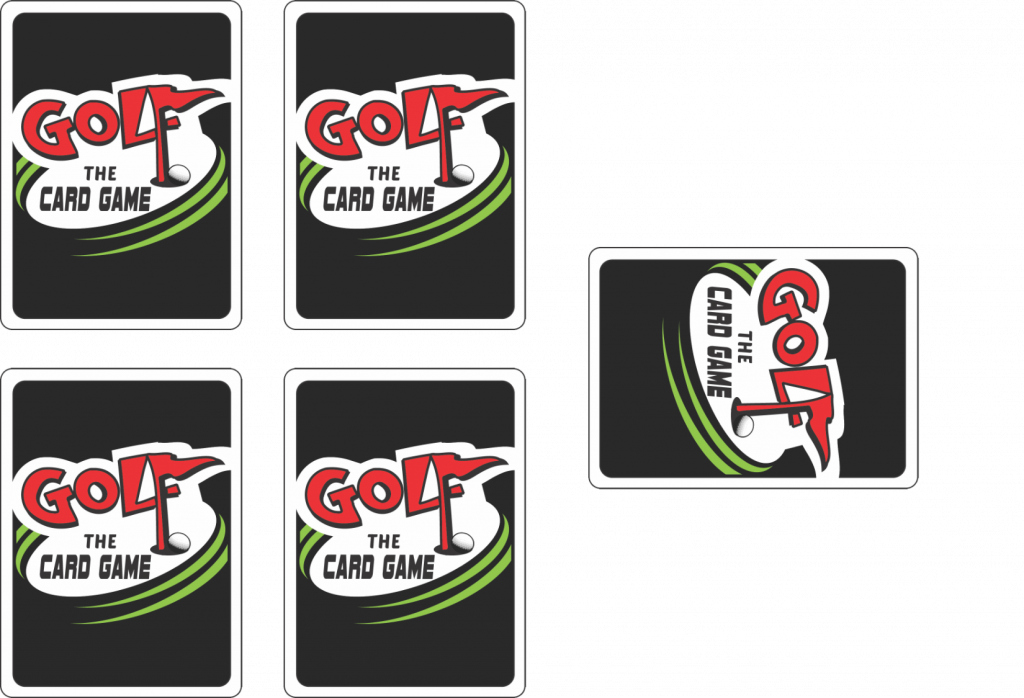
On the 1st hole and the 10th hole, each player is dealt a 5th card face down. This is your Mulligan card. Think of it like a secret club tucked in your bag — you know it’s there, but you don’t know what it is until you decide to use it.
When You Can Use It
Your first Mulligan card can be played on any hand before the 10th hole. Your second Mulligan (dealt on hole 10) can be played on any hand before the 18th hole. So you’ve got a 9-hole window each time to decide when to pull the trigger.
But here’s the catch — you cannot use it until all players’ turns are complete and all 4 of your cards are face up. No sneaking it in early. You have to see the full picture first.
How You Play It
If you decide to use your Mulligan, you flip it over and must replace one of your four face-up cards with it. You’re swapping — not adding. Choose wisely, because whatever card you replace is gone.
What If You Don’t Use It?
You’re not obligated to play it. If you don’t use your Mulligan by the end of hole 9, it goes back in the deck. You’ll get a fresh one on hole 10. Same deal — use it before hole 18 or lose it.
The Order Matters
Mulligans are played in deal order. That means the player who was dealt first decides first whether to use theirs. This matters because once you see someone else play a Mulligan (and maybe dramatically improve their hand), it changes the math on whether you should play yours.
And watch out — there may be one or more Mulligan cards played and a FORE card or two hiding in the mix. Things can shift fast.
The Strategy: When to Use It (and When to Hold)
Here’s where the Mulligan gets interesting. In real golf, it’s a mindless freebie — you topped your drive, hit another, move on. In GTCG, it’s a genuine strategic decision.
Use it early if you’re sitting on a brutal hand in the first few holes. A bad start in GTCG can snowball, and that Mulligan might be the difference between a bogey and a par.
Hold it if your hands have been decent. That Mulligan gets more powerful the longer you wait because the pressure builds. Using it on hole 8 when you’re in a tight match? That’s clutch.
The gamble: Your Mulligan is face down. You don’t know if it’s going to save you or be a lateral move. It might be exactly what you need — or it might not be any better than what you’ve got. Sound familiar? That’s golf.
From Montreal to Your Kitchen Table
David Mulligan just wanted a second chance on a cold morning in Canada. Almost 100 years later, that impulse lives on — not just on golf courses, but at kitchen tables and game nights everywhere.
In GTCG, the Mulligan card captures everything that makes the real tradition great: the hope, the risk, and the moment where you have to decide — do I play it safe, or do I go for it?
Next time you’re dealt that 5th card face down, tip your cap to David and Buddy. They didn’t know it, but they invented one of the best mechanics in card gaming.
Now flip it over and see what you’ve got.
Want to experience the Mulligan for yourself? Grab Golf the Card Game on Amazon and bring golf’s greatest tradition to your next game night.
Have you ever used a Mulligan that completely changed the outcome of a round — real golf or GTCG? Drop a comment below.
Pingback: Par-It Golf Card Game: Pure Gambling Meets Club Selection - Golf the Card Game
Pingback: Teed Off - Golf the Card Game