
Rain ‘r Shine Golf (1991): A Card Game Built for North Dakota Winters
If you live in a place where the golf season is brutally short, you find other ways to play.
Rain ‘r Shine Golf came out of Grafton, North Dakota — a small town of about 4,000 people in the Red River Valley, near the Canadian border. The average January temperature is 5°F. The golf season, if you’re generous, runs maybe May to September. The rest of the year? You’d better have a card game.
In 1991, Ken and Gary Wiesen — operating as KWG out of a P.O. Box in Grafton — created exactly that.
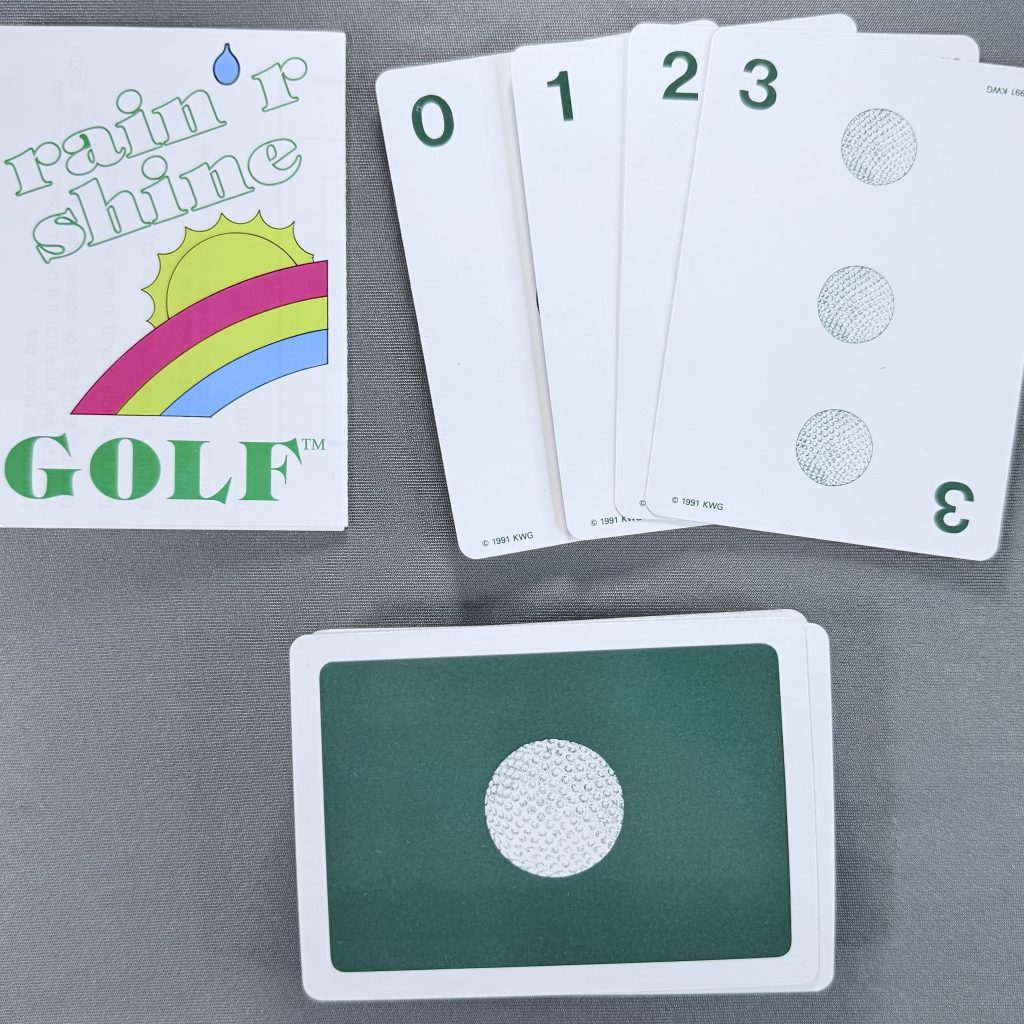
No Box. Just a Game.
Rain ‘r Shine Golf didn’t come in a tuck box or a printed cardboard package. It came in a plastic case with a folding scorecard/instruction insert and a business card. That’s it. Ken and Gary Wiesen’s names on the front. The P.O. Box address on the back: “To Order Additional Games Write: KWG, P.O. Box 621, Grafton, ND 58237.”
No website, no distributor, no barcode. Just two names from a small town in North Dakota, asking you to write them a letter if you wanted more copies.
I haven’t been able to find much about KWG online. No company history, no trademark records that jump out, no big story. Just the game itself, the business card, and a P.O. Box in a town where the main golf course — Fair Oaks, a 9-hole layout that’s been there since the 1930s — sits along the Park River in Walsh County.
How It Played
Rain ‘r Shine Golf is a draw-and-swap style card game with golf scoring layered on top. If you’ve ever played the traditional card game called “Golf” with a standard deck, the bones will feel familiar — but KWG added structure and scoring details that make it its own thing.
The deck has 52 cards, each with a point value from 0 to 10. Each player gets dealt four cards, arranged in a 2×2 grid face down. You can peek at your bottom two cards once — and only once — at the start of each hole. Your top two? You never look at them until the hole is over. You’re playing partially blind.
On your turn, you draw a card from the deck and either swap it for one of your four cards (hoping to lower your total) or discard it. Here’s the gut punch: if you swap a card, the old one goes to the discard pile — even if it turns out to have been lower than what you replaced it with. No take-backs. That blind swap on the top row is where the tension lives.
When you think your hand is low enough — or you want to catch other players holding high cards — you knock on the table and forfeit your turn. Everyone else gets one more draw to improve. Then all cards flip and scores are tallied.
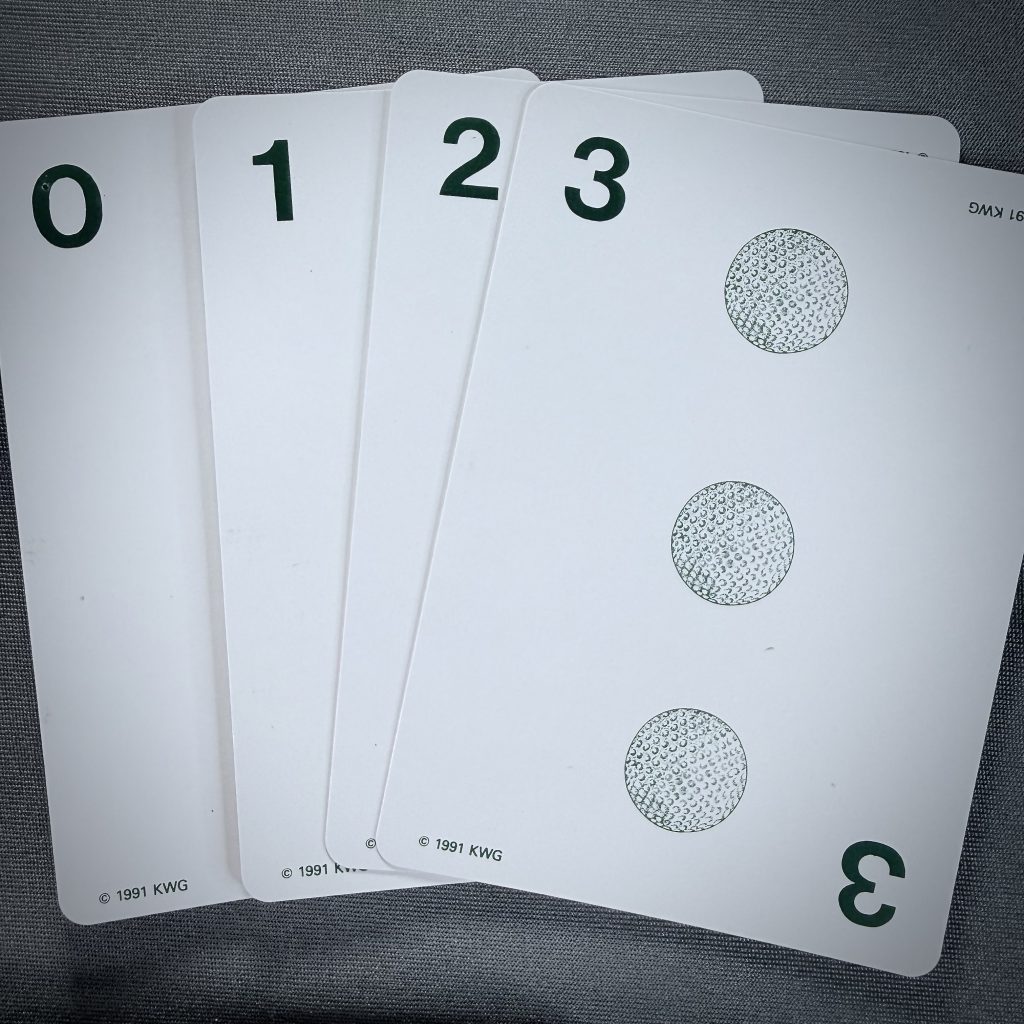
The Scoring Twist
This is where Rain ‘r Shine separates itself. The scorecard assigns a par value to each of the 9 or 18 holes. If your card total for the hole comes in under par, you earn bonus deductions — 10 points off for a birdie, more for an eagle or double eagle. If you’re over par, you just record your raw total.
That scoring system turns a simple swap-and-draw game into something that actually feels like golf. You’re not just trying to go low — you’re playing against a par for each hole. Beating par feels like something. Coming in over par stings. It’s a small design choice that adds real emotional texture to each round.
Grafton, North Dakota: Where the Game Came From
Grafton sits in the northeast corner of North Dakota, 12 miles from the Red River and right on the Park River. Founded in 1881 when the Great Northern Railway pushed through, the town grew from 400 people to 1,500 within a year. It’s the county seat of Walsh County, home to North Dakota’s first public library (opened 1897), and surrounded by some of the richest farmland in the world — the Red River Valley’s black loam soil that earned this region the title “Breadbasket of America.”
It’s also a place where winters are long, cold, and real. When Ken and Gary Wiesen named their game Rain ‘r Shine Golf, they weren’t just being cute. In Grafton, you play golf when you can — and when you can’t, you’d better have a backup plan. This game was the backup plan.
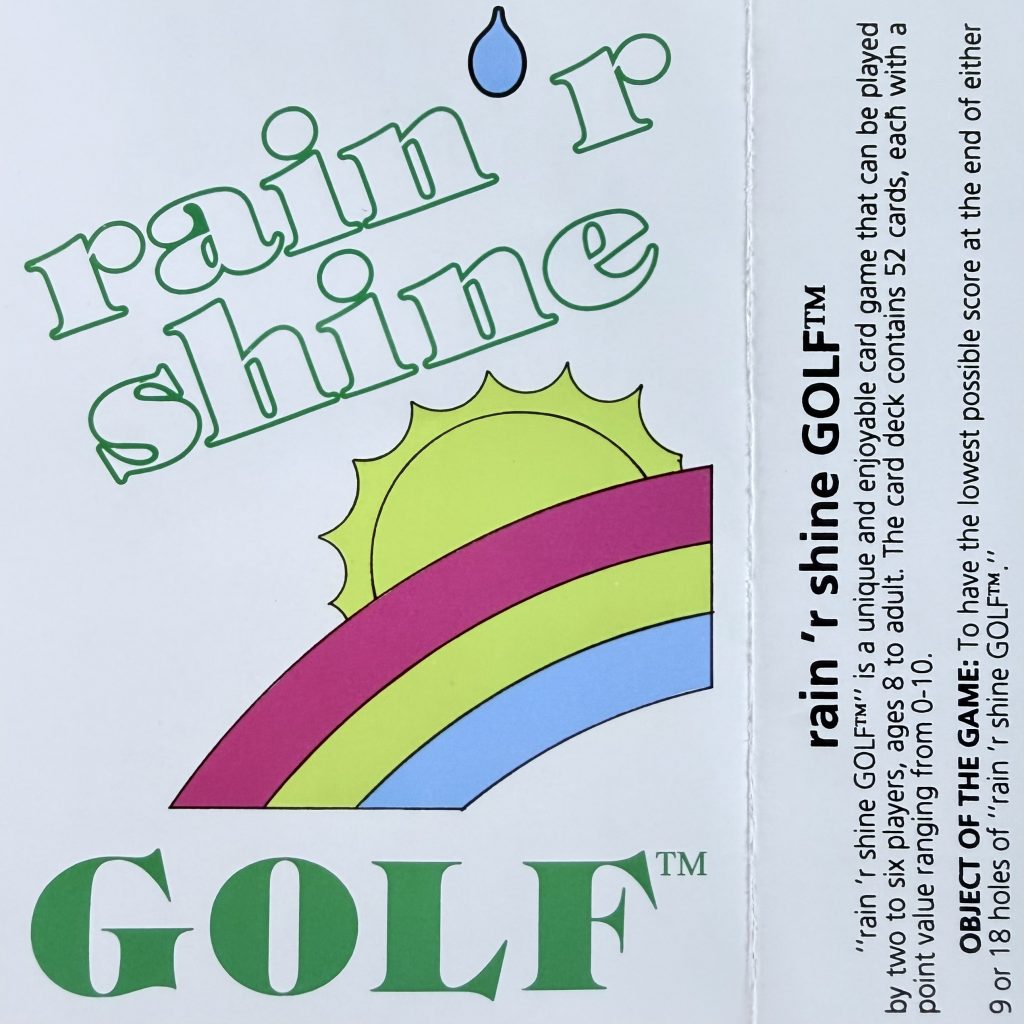
Finding One Today
Rain ‘r Shine Golf is extremely rare online. I haven’t found many — if any — copies currently for sale. Given the plastic case packaging and P.O. Box distribution, this was likely a very small production run sold locally or by mail order. If you have one, you’ve got a genuine piece of micro-indie game history from a small town in the northern plains.
Small Towns, Big Ideas
This series keeps reinforcing the same truth: the impulse to create a golf card game isn’t limited to toy companies or game publishers. It shows up in a P.O. Box in Grafton, North Dakota. In a man’s living room in Toano, Virginia. On a pool deck in Buffalo, New York.
Ken and Gary Wiesen made a game, put their names on a business card, stuck it in a plastic case, and asked people to write them a letter if they wanted one. That’s as grassroots as it gets.
When I discovered Rain ‘r Shine Golf, I couldn’t help but notice some familiar DNA — the four-card layout, the draw-and-swap, the knock. Golf the Card Game shares some of that foundation, and I think it validates the core idea: these mechanics just work for a golf card game. But GTCG takes the format somewhere new with the Fore! Card, Wild Cards, and the Mulligan — gameplay layers that create swings, surprises, and those “did that just happen?” moments at the table. Two guys in North Dakota and a guy in Buffalo arriving at a similar starting point 22 years apart, then building in different directions. That’s the beauty of game design.
If you know anything about Ken and Gary Wiesen, KWG, or Rain ‘r Shine Golf, we’d love to hear from you. There’s a story here that deserves to be told. Reach out at playgtcg.com or find us on social media.
This post is part of our ongoing series exploring vintage golf card games throughout history. From corporate giants to P.O. Box operations in small-town North Dakota, the love of golf at the table has never faded.